BACK TO BLOG
Why Your Dentist Might Be the First to Spot Sleep Apnea
Here is something most people do not know. The first person to catch sleep apnea is often not a doctor. It is a dentist, during a routine cleaning, looking at the backs of your teeth.
That sounds odd until you understand what sleep apnea does to your mouth. So let's talk about it the way I would if we were sitting across a table, because this is one of those health problems that hides in plain sight for years.
What sleep apnea actually is
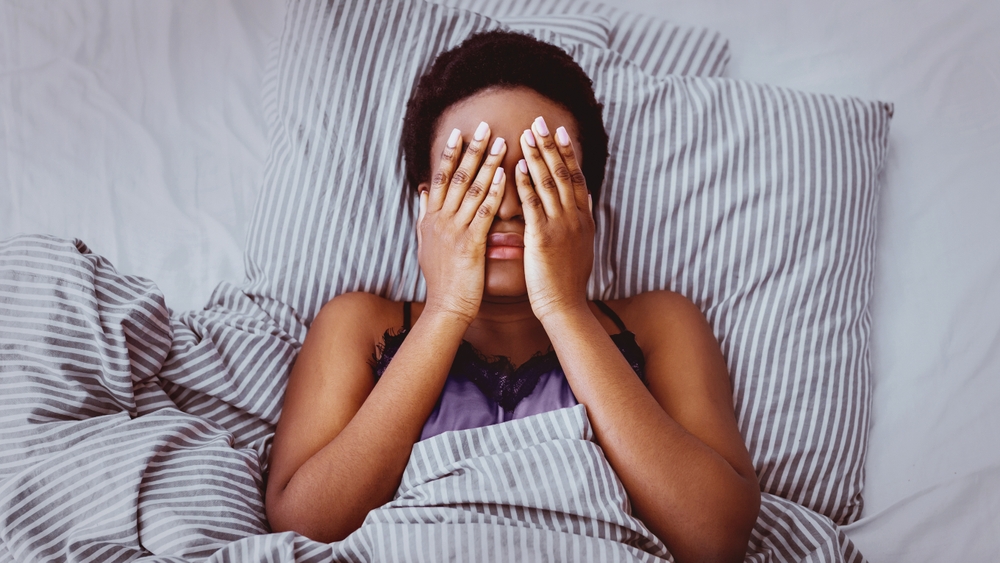
Obstructive sleep apnea is simple to describe and hard to notice on your own. When you fall asleep, the muscles in your throat relax. In some people, they relax enough that the airway narrows or closes. Your body notices it is not getting air, jolts you partly awake, you gasp or snort, and you go back under. You almost never remember it.
That can happen a handful of times an hour or more than thirty. Each time, your sleep gets broken and your oxygen dips. You spend the night fighting for air and wake up feeling like you barely slept, because in a real sense you did not.
The frustrating part is how ordinary the symptoms feel. Tired all the time. Coffee that does not work anymore. Falling asleep on the couch at eight. Waking up with a headache or a dry mouth. Snoring your partner has mentioned more than once. Most people file all of that under "getting older" or "stressful year" and never connect the dots. Most people who have sleep apnea have never been diagnosed.
Why this matters more than feeling tired
If it were only about being sleepy, you could live with it. It is not.
Every time your breathing stops, your blood pressure spikes and your heart works harder. Over years, untreated sleep apnea is tied to high blood pressure, heart disease, stroke, irregular heart rhythms, type 2 diabetes and weight gain. It also makes you dangerous behind the wheel. Drowsy driving is a real cause of accidents, and people with untreated apnea are at higher risk.
So when a friend says "I'm just a bad sleeper," I want to push back a little. Bad sleep for years is a symptom, not a personality trait.
What your dentist sees that you cannot
This is the part I find fascinating. Your mouth keeps a record of what happens while you sleep.
Worn teeth. People with sleep apnea often grind or clench at night. Nobody fully agrees on why, but one theory is that the jaw thrusts forward to reopen the airway. Over time the molars flatten and the front teeth develop chipped, shortened edges. A dentist can spot that pattern in seconds.
Dry mouth and gum irritation. If you breathe through your mouth all night, your saliva dries out. That shows up as inflamed gums, more cavities than your brushing habits would predict, and a raw feeling in the morning.
A scalloped tongue. When the tongue presses against the teeth all night, the edges take on a wavy shape. It is a small clue, but it points the same direction.
A crowded airway. Large tonsils, a thick soft palate, a small or set-back lower jaw, a large tongue. Your dentist is looking at all of this anyway.
None of these prove you have apnea. But together with the questions a good dentist will ask, such as how you sleep, whether you wake with headaches, whether anyone has heard you stop breathing, they add up to a reason to get tested.
How you actually find out
A dentist cannot diagnose sleep apnea. Only a sleep study can, and a physician reads it. Be wary of anyone who skips that step.
The good news is that testing is far easier than it used to be. For many people it is a home sleep test: a small device you wear for a night or two in your own bed that records your breathing, oxygen and heart rate. Some cases still call for an overnight study in a sleep lab, especially if other conditions are suspected.
The result comes back as a number, how many times per hour your breathing paused or dropped. Roughly, five to fifteen is mild, fifteen to thirty is moderate, and above thirty is severe. That number decides what treatment makes sense.
The practical hurdle is usually the referral and the paperwork, not the test itself. A dental office that helps coordinate with your physician removes the excuse most of us would otherwise use to put it off another year.
CPAP is not the only answer
When people hear "sleep apnea" they picture a mask and a hose. CPAP works very well and for severe apnea it is usually the right call. But a lot of people cannot tolerate it, and a lot of people with mild to moderate apnea have another option.
Oral appliance therapy is a custom device, made from impressions of your teeth, that you wear at night. It holds your lower jaw slightly forward, which keeps your tongue and soft tissue from collapsing back into your airway. No mask, no machine, nothing plugged in. It fits in your pocket when you travel.
Sleep medicine guidelines support oral appliances as a first treatment for mild to moderate obstructive sleep apnea, and as an alternative for people who have tried CPAP and cannot use it. It is not right for everyone. Severe apnea, certain jaw joint problems, and not having enough healthy teeth to hold the device can rule it out.
A few honest things to know:
- It takes a few weeks to feel normal. The first nights feel like sleeping in a mouthguard.
- It needs adjusting. Expect follow-up visits where the dentist fine tunes how far forward it holds your jaw.
- You should retest with the appliance in. The only way to know it is working is another sleep study, not just feeling better.
- Long-term wear can shift your bite slightly and cause morning jaw soreness. A dentist trained in this checks for it at every visit.
- Because it treats a medical condition, it is often billed to medical insurance rather than dental insurance. Ask the office to check before you assume it is not covered.
Not every dentist makes these. It takes specific training in dental sleep medicine and a working relationship with physicians who diagnose sleep disorders.
What to bring up at your next appointment
You do not need to know what is wrong. Just say the true things out loud:
- I am tired no matter how long I sleep.
- I wake up with headaches or a dry mouth.
- My partner says I snore, or that I stop breathing.
- I fall asleep watching TV or, worse, at a red light.
- I have been told I grind my teeth.
Any one of those is enough for a dentist who takes sleep seriously to look closer and help you get tested.
Why Wilson Dental Associates is the right place to have this conversation in Roanoke
Most general dental offices do not screen for sleep problems. Wilson Dental Associates does, and it is not an afterthought.
Dr. Sarah K. Wilson, DDS, FAGD, is a member of the American Academy of Dental Sleep Medicine, the professional body for dentists who treat sleep-disordered breathing with oral appliances. That membership matters. It means the screening questions get asked at your cleaning, the referral for a sleep study gets coordinated with your physician, and if you are a candidate for an oral appliance, it is made and adjusted by someone trained to do it properly. Sleep apnea and TMJ treatment are listed services at the practice, not favors.
Dr. Wilson has practiced since graduating from the Virginia Commonwealth University School of Dentistry in 2011 and holds a Fellowship in the Academy of General Dentistry, a credential earned through hundreds of hours of continuing education beyond dental school. She is joined by Dr. Collin Trank, DDS. The practice's stated philosophy is whole-person wellness, which is exactly the mindset that connects worn molars to a heart-health problem.
The office is at 4231 Colonial Avenue in Southwest Roanoke, easy to reach from Cave Spring, Salem, Vinton and the rest of the Roanoke Valley, with early hours Monday through Friday for people who need to get in before work. If you are searching for a sleep apnea dentist in Roanoke, VA, or you just want someone to take your tiredness seriously, call (540) 989-4698 and mention how you have been sleeping. That one sentence is often where it starts.