BACK TO BLOG
Veneers, Explained by Someone Who Wants You to Get It Right
Veneers have a reputation problem. Say the word and most people picture a row of oversized, blinding white teeth on a reality show. That is a bad veneer job, and it is not what good ones look like. Good veneers look like your teeth, the version you remember before the chip and the coffee and the years of hiding.
I want to give you the conversation I wish everyone had before they either rushed into veneers or ruled them out. Let's start with what they are.
What a veneer is
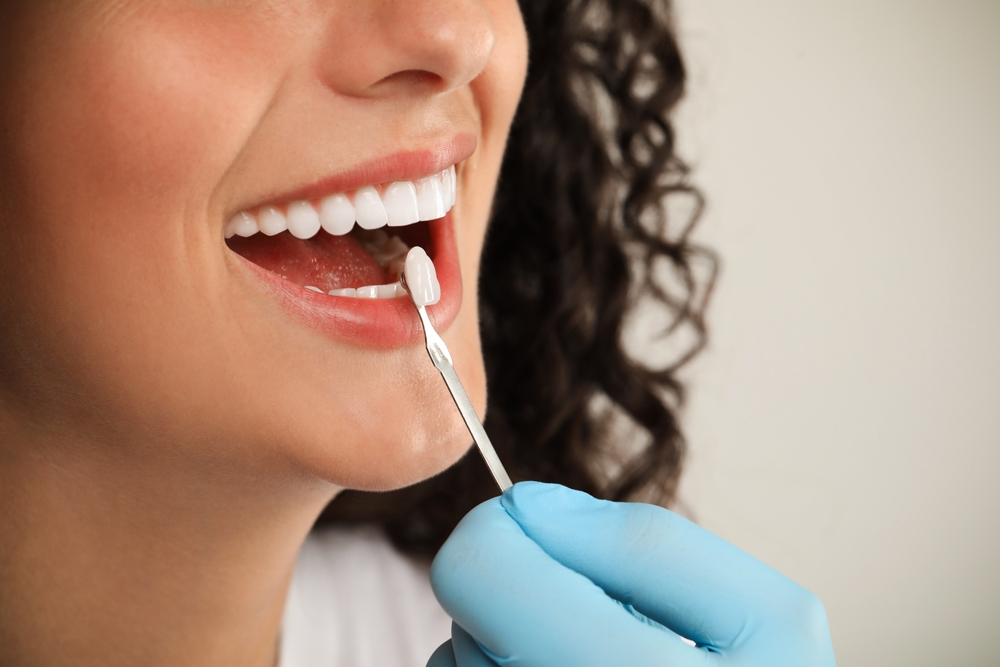
A veneer is a thin shell, usually porcelain, that is bonded to the front surface of a tooth. Think of it like a very precise, very durable false nail for a tooth. It covers what is behind it and changes the color, shape, length and surface of the tooth all at once.
There are two kinds worth knowing about:
Porcelain veneers are made in a dental lab from an impression or digital scan of your prepared teeth. Porcelain resists stain, reflects light the way enamel does, and typically lasts ten to fifteen years or more with good care.
Composite veneers are built directly on the tooth from the same resin used in bonding. They are faster and cheaper, but they stain more easily and generally last five to seven years before needing refreshing.
For a front tooth you want to look right for the next decade, porcelain is the usual answer.
What veneers fix well
Veneers are the right tool when a tooth has more than one problem at once, or a problem nothing else can fix:
- Discoloration that will not whiten. Gray or brown banding from childhood antibiotics, a tooth that darkened after a root canal or injury, or fluorosis spots. Whitening does little for these. A veneer covers them completely.
- Chips and worn edges on teeth that have been bonded before and keep breaking.
- Small gaps you want closed without months of aligners.
- Uneven shapes or sizes. A tooth that is too small, too pointed, or shaped differently from its partner.
- Mild misalignment. A tooth slightly rotated or set back can look straight with a veneer, sometimes called instant orthodontics. This has limits, which we will get to.
What veneers do not fix
This is where a good dentist earns your trust, because there is money in saying yes to everything.
- Real crowding or bite problems. If your teeth overlap significantly or your bite is off, veneers over the top just hide it and can make it worse. Aligners or braces first, veneers after if you still want them.
- Gum disease or cavities. Veneers go on healthy teeth. Anything active gets treated first.
- Heavy grinding. If you clench or grind at night and it is not managed, you will chip porcelain. A night guard is not optional for grinders with veneers.
- Teeth with very little enamel left. Veneers bond to enamel. A tooth that has been heavily filled or broken down usually needs a crown instead.
- Yellowing alone. If your only complaint is color and your teeth are otherwise healthy and well shaped, whitening is far cheaper and keeps your natural teeth untouched. Do not let anyone veneer a whitening case.
The one thing you have to understand before you say yes
Traditional porcelain veneers require removing a thin layer of enamel from the front of the tooth, often around half a millimeter, so the veneer has room to sit without looking bulky. That enamel does not grow back. Once a tooth is prepared for a veneer, it will need a veneer, or something like it, for the rest of your life.
That is not a reason to avoid veneers. It is a reason to be sure. Ask the dentist how much enamel will be removed and whether you are a candidate for minimal-prep or no-prep veneers, which work for some people, particularly those with small or set-back teeth. Ask what happens in fifteen years when a veneer needs replacing. A dentist who answers those questions plainly is one you can trust with an irreversible decision.
Why some veneers look fake and others look like you
The reality-show look comes from three mistakes: too white, too big, and too uniform.
Natural teeth are not one flat color. They are slightly more yellow near the gum, more translucent at the edge, with faint texture and tiny irregularities. Good porcelain veneers are layered to copy that. The shade is chosen to suit your skin and your other teeth, not the brightest chip on the guide. The shape is drawn to fit your face and lips, and the two front teeth are usually a hair different from each other, because yours were.
Before anything is drilled, a good dentist will design your smile. That may be a wax model on a cast of your teeth, a digital mock-up on photos of your face, or a trial version placed over your real teeth for a few minutes so you can see it in a mirror and in a photo. Ask for this. If you cannot see the plan before your enamel is touched, that is a red flag.
What the process actually involves
Expect two to four visits over one to two months.
- Consultation. Photos, x-rays, a look at your bite and gums, and most importantly a conversation about what you want your smile to look like. You should see before and after photos of the dentist's own patients with concerns like yours.
- Design. The mock-up described above. Changes happen here, while they are free.
- Preparation. The teeth are shaped, an impression or scan is taken, and temporary veneers are placed. Temporaries are not the final product. They are bulkier and a little dull. This is the stage where you have to trust the plan.
- Lab work. Two to three weeks, typically.
- Placement. The veneers are tried in, checked for fit and shade, adjusted, and bonded permanently. The bite is checked and fine tuned. Then someone hands you a mirror.
- Follow-up. A check a week or two later to be sure the gums are happy and the bite feels right.
Living with veneers
Porcelain does not decay, but the tooth underneath it still can, right at the edge where veneer meets tooth. Brush, floss and keep your regular cleanings. Do not chew ice, bite fingernails or open packages with your front teeth. Wear a night guard if you grind. Expect your dentist to check the edges and your gums at every visit. Treated this way, well-made porcelain veneers often outlast the ten-to-fifteen-year estimate.
Questions to ask any dentist before you commit
- How many veneer cases do you do, and can I see before and after photos of your own patients?
- Will I see a mock-up before you prepare my teeth?
- How much enamel will you remove? Am I a candidate for minimal-prep?
- Which lab makes them, and will the ceramist see photos of my face?
- What happens if one chips? What does a repair or replacement cost?
- Would whitening, bonding or aligners get me most of the way there for less?
That last question is the tell. A dentist who is willing to talk you out of veneers is the one to trust when they say you are a good candidate.
Why Wilson Dental Associates is the right place for veneers in Roanoke
Veneers are the one cosmetic treatment where the dentist's judgment and artistry matter more than the material, because the decision is permanent and the result is on your face every day.
Dr. Sarah K. Wilson, DDS, FAGD, has practiced in Roanoke since graduating from the Virginia Commonwealth University School of Dentistry in 2011. She holds a Fellowship in the Academy of General Dentistry, a credential that requires hundreds of hours of continuing education and a written examination, and she describes her work as blending scientific precision with artistic vision. That is precisely the pairing veneers demand: the precision to prepare a tooth conservatively and the eye to make porcelain look like enamel. Her memberships in the Academy of Laser Dentistry and the International Academy of Facial Aesthetics reflect a practice that thinks about the gum line and the whole face, not just the teeth in isolation, which is the difference between veneers that look placed and veneers that look grown.
Just as important, Wilson Dental Associates offers the alternatives too: whitening, bonding, clear aligners and gum contouring. When a practice can do all of them, you are more likely to be steered to the treatment you actually need rather than the one on the menu. Dr. Collin Trank, DDS, has joined the team, and Beatrix, the resident therapy dog, meets nervous patients at the door.
The office is at 4231 Colonial Avenue in Southwest Roanoke, serving patients from across the Roanoke Valley, with appointments Monday through Friday starting at 8 AM. If you are searching for porcelain veneers in Roanoke, VA, or you are not sure whether veneers are even the right answer for you, call (540) 989-4698 and book a consultation. Bring every question on the list above. Ask them all.